Get the latest from


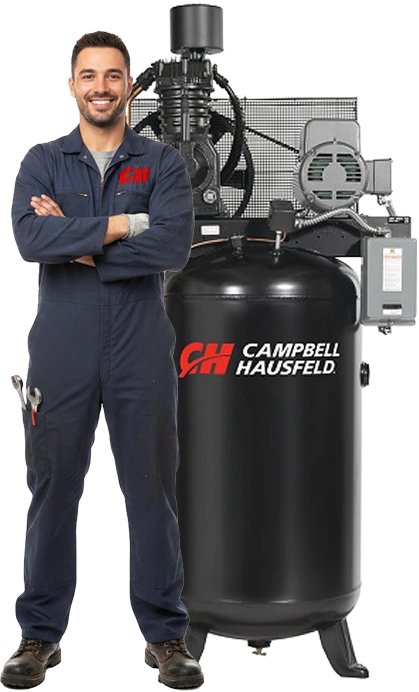







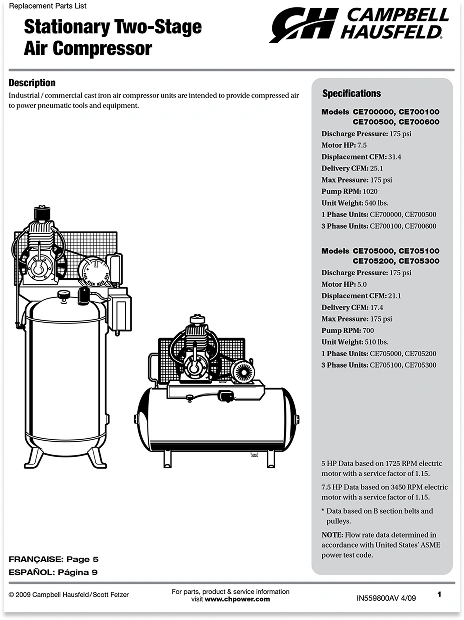
Whether you’ve lost your paper copy and need to download a digital version of your compressor’s manual or you want to use our interactive parts diagrams to see exactly how your machine fits together for a quick fix, we’ve made everything you need to know easily accessible. Additionally, we simplify maintenance by providing clear checklists for oil changes and filter replacements, ensuring your air power remains strong for years to come.
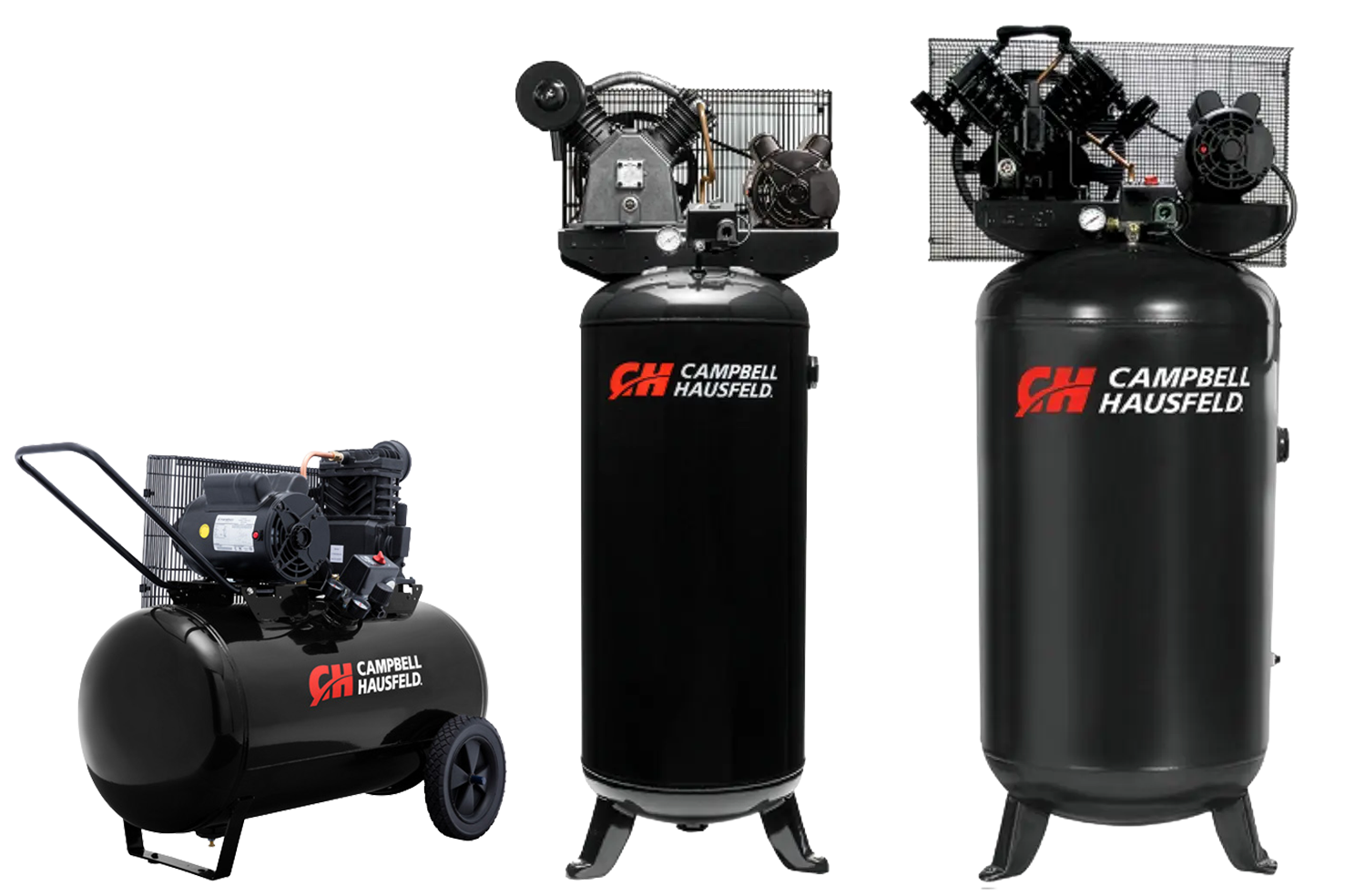
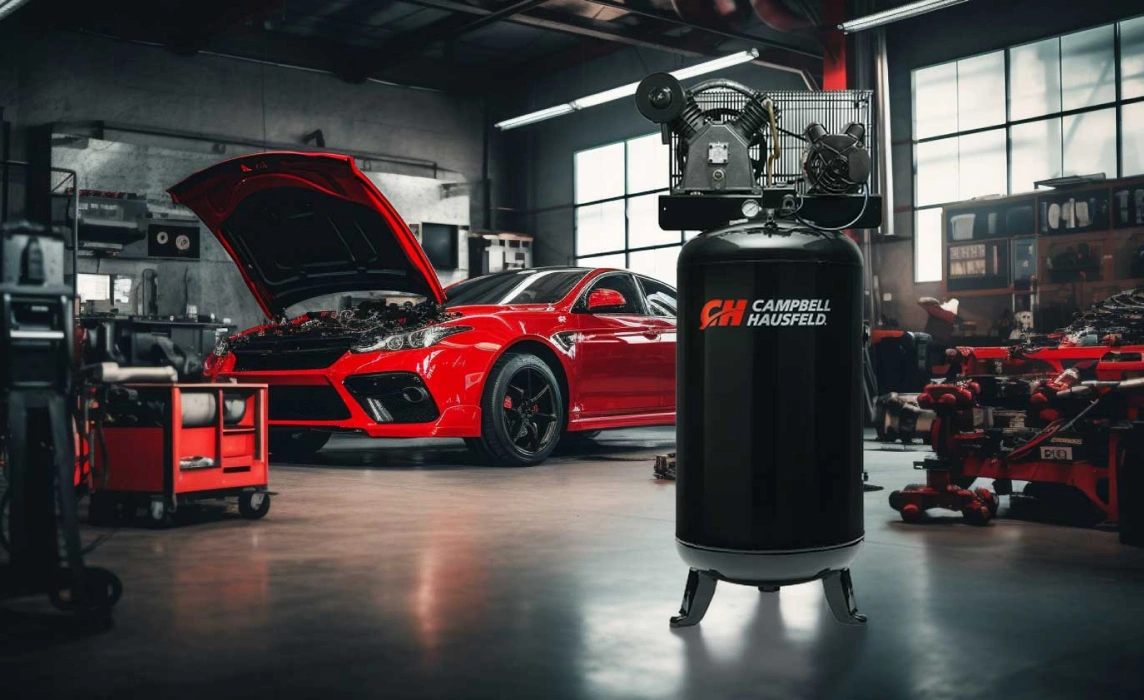
From quiet, reliable job site portables to high-capacity two-stage compressors, find the exact power and CFM your shop demands. Every compressor in our lineup is engineered to deliver consistent, heavy-duty performance under the most demanding commercial conditions. Whether you are running a high-volume automotive garage, managing a busy production floor, or operating on a rugged job site, our equipment is built to minimize downtime and keep your air tools running at peak efficiency.
Choosing the right compressed air system shouldn't be a guessing game. Our comprehensive digital catalog makes it simple to cross-reference technical specifications, evaluate tank sizes, and match air delivery metrics to your specific business needs. Browse our full collection of professional-grade compressors and specialized accessories today to spec your next shop upgrade with absolute confidence.
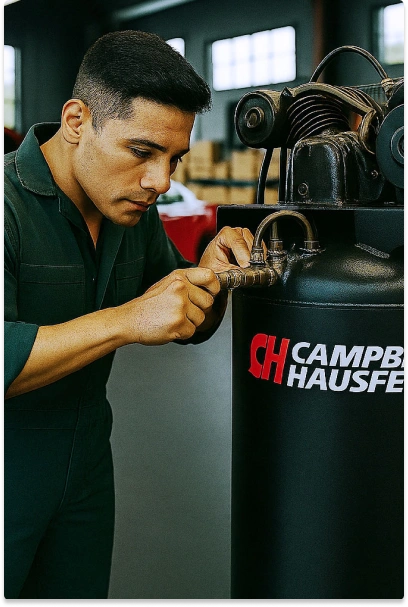
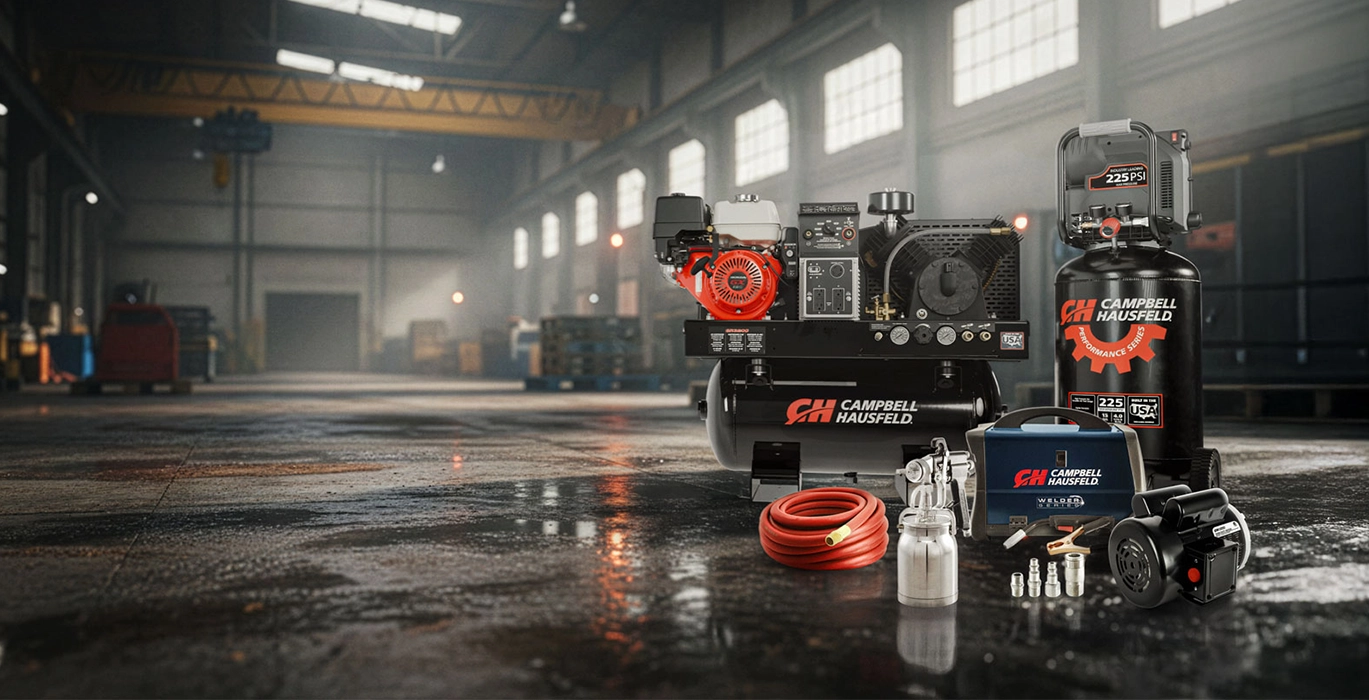
Maintain the performance and longevity of your equipment with original manufacturer parts. We offer a comprehensive inventory of high-quality components designed specifically for your Campbell Hausfeld products.
Whether you need routine maintenance kits or specific replacement components, our team is ready to help you find exactly what you need to get back to work. Browse our full selection of air compressor parts, service kits, and accessories online today.
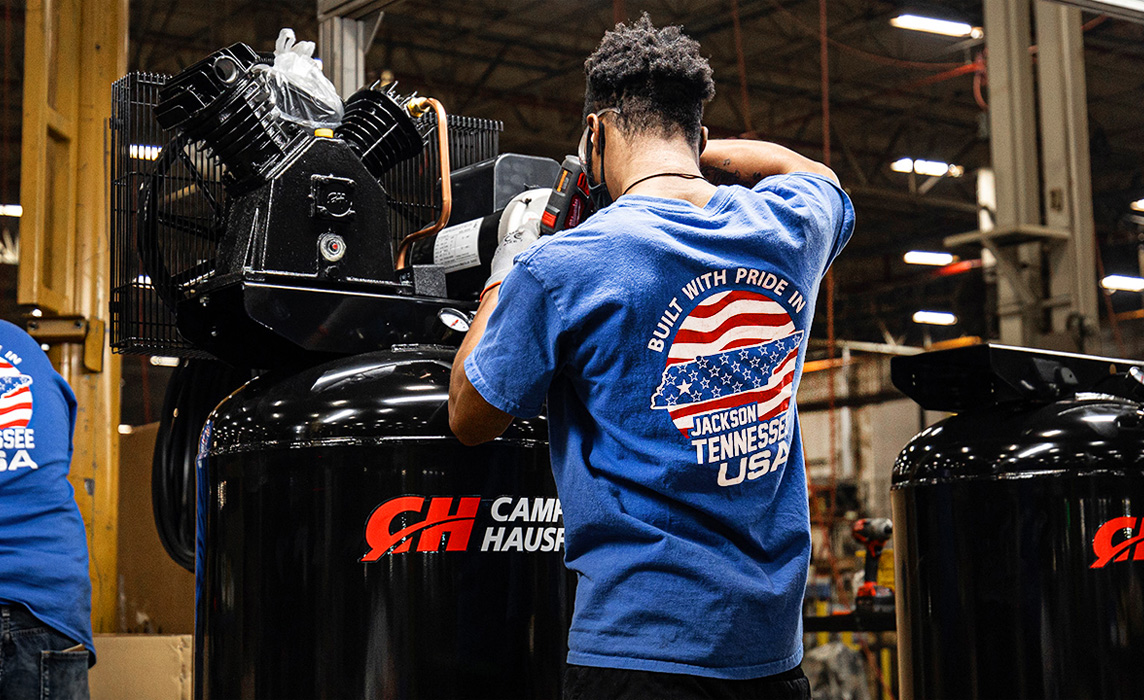

For decades, we have focused on a singular goal: providing dependable, hard-working air power to the American workforce. Our commercial-grade equipment undergoes rigorous quality and performance testing to ensure it meets the demanding standards of professional tradesmen, day in and day out. We understand that your equipment is the backbone of your operations, which is why we refuse to cut corners on durability, engineering precision, or structural integrity. From the shop floor to the job site, our compressors are built to deliver the relentless power your livelihood depends on.
Campbell Hausfeld products,
equipment releases, and promotions.

For small tasks like tire inflation or brad nailing, a 1–6 gallon tank is plenty. For continuous tools like sanders or paint sprayers, look for 20+ gallons to prevent the motor from running constantly.
To explain it to a pro without using a fraction or a complex layout, you can break it down using percentages and a simple timing example. Here is a version written exactly for that "talk it out" style:
To find your compressor's actual duty cycle, you need to compare its running time against the total time of one complete cycle. A full cycle includes the time the motor is running plus the time it spends resting.
For example, if your compressor runs for 4 minutes to pump up the tank, and then rests for 6 minutes before turning back on, the entire cycle lasted 10 minutes. Because it was running for 4 minutes out of that 10-minute total, it operated for 40 percent of the time. That means your actual duty cycle is 40 percent.
Standard automotive oils contain detergents designed to clean internal combustion engines by suspending contaminants, which are then cleared by an oil filter. Because most small-to-medium reciprocating compressors lack an oil filter, these detergents keep debris and moisture suspended in the oil, circulating them through the bearings and cylinders.
The standard industry rule of thumb is to maintain two to five gallons of tank capacity for every one cubic foot per minute or CFM of compressor output.
Exactly where you fall on that spectrum depends on the type of tools you are running. If you are using intermittent tools like impact wrenches or nailers that draw air in short bursts, two to three gallons per CFM is usually plenty. However, if your shop runs continuous-draw tools like sanders or paint sprayers, you should aim for four to five gallons per CFM. This larger buffer prevents the motor from constantly cycling and gives the air time to cool down and drop its moisture before hitting your lines.
Not necessarily. A two-stage rating refers to the compression process itself, not the physical number of cylinders on the pump.
In a two-stage compressor, air is drawn into a large cylinder and compressed to an intermediate pressure. From there, it passes through an intercooler tube to drop the temperature before entering a smaller cylinder, where it is compressed a second time to a much higher pressure, typically up to 175 PSI. While achieving this requires at least two cylinders, larger industrial units might use three or four cylinders to distribute the heavy workload of those same two compression stages.
For a properly designed pneumatic system, the total friction loss and pressure drop between the compressor tank and your furthest tool should never exceed 10 percent of your total system pressure. As a best practice, most professionals try to keep that drop under 5 PSI.
Any drop larger than that forces your compressor to work much harder and run at a higher pressure than necessary just to compensate for the restrictive plumbing. This drastically increases your energy costs, drives up system temperatures, and causes premature wear. If your shop is experiencing a massive drop, the fix usually involves upgrading to a larger piping diameter or redesigning the layout into a continuous loop to improve airflow.

At Campbell Hausfeld, we are committed to providing you with the reliable support and service you need to get the job done. Whether you are looking for product assistance, troubleshooting help, or account information, our dedicated customer service team is ready to assist you. You can reach out to us directly using the contact form on this page or find our specific department phone numbers and email addresses listed below.
General Inquiry Email: info@campbellhausfeld.com
Main Phone Number: 847.821.9630
A streamlined resource helping Pros and DIYers find exact specs and CFM requirements.